Cortina d’Ampezzo
A Moveable FeastCortina d’Ampezzo stands in Hemingway’s recollection as a place of return and renewed writing: after a reporting assignment interrupted his spring skiing, he rejoined Hadley there and wrote “Out of Season,” his first story after losing his earlier work. The place matters not only as a mountain setting but as the scene of a formal discovery—the power of leaving part of a story untold.
The Return to Cortina
Hemingway came to Cortina d’Ampezzo after interrupting spring skiing to report from the Rhineland and the Ruhr. He returned to join Hadley, making the town the setting for a reunion after his absence. The account gives few details of the town itself; its significance lies in what happened there during this return.
The visit belongs to a difficult period in which Hemingway doubted whether he could write again. Against that uncertainty, Cortina became the place where he found a way back to fiction. The memoir identifies the story written there as the first he was able to write after losing everything, making the act of composition a concrete change in his circumstances rather than simply an aspiration.
“Out of Season” and Omission
The story was simple and called “Out of Season.” Hemingway left out its real ending: the old man hanged himself. He did so deliberately, under a theory that a writer could omit material while knowing it had been omitted, allowing what remained to strengthen the story and make readers feel more than they could fully understand.
Cortina is therefore associated with a technique as well as a recovery. The omitted ending was not an accidental gap: the account presents it as a conscious decision about how a story could work. What the reader does not receive directly is meant to exert pressure on what remains.
Recollection and Literary Significance
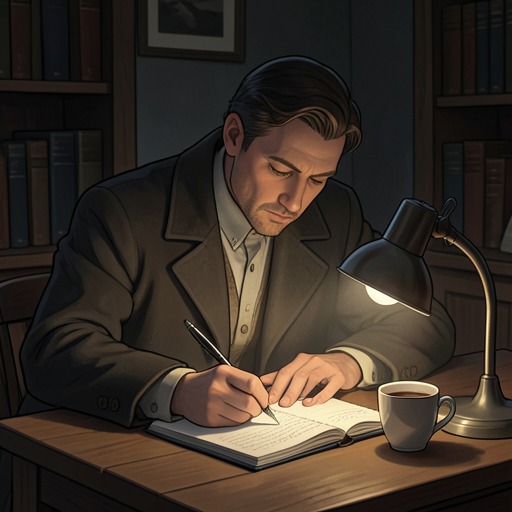
Later, while sitting in Lipp’s in Paris, Hemingway remembered Cortina as the place where he had first managed to write after the loss. That recollection led into a broader consideration of what he knew best and cared about most. He then walked to the Closerie des Lilas and wrote in a notebook; the story he began there concerned a return from war, though it made no mention of the war itself. The account does not identify that later story as “Out of Season,” but the sequence connects the memory of Cortina with a continuing practice of shaping fiction through omission.
Cortina’s significance is thus concentrated in a single episode: a reunion with Hadley after an interrupted journey, a first story after loss, and a deliberate experiment in withholding its ending. The memoir returns to the place not for an expansive portrait of its landscape, but because it marks the point at which writing resumed and omission became a consciously articulated method.